
Sorry, you need to enable JavaScript to visit this website.
Library Notice

Scopus is the largest abstract and citation database of peer-reviewed literature powered by Elsevier. This platform covers over 100 million records of journals, conference proceedings, and books on life sciences, health sciences, physical sciences, arts and humanities, and social sciences. Some of its records date back to pre-1970. Researchers can easily find and verify their profiles, and view comprehensive metrics such as citation counts and h-index. A well-managed profile helps enhance researcher discoverability, track research impact, and showcase your contributions. Let’s see how to make it possible.


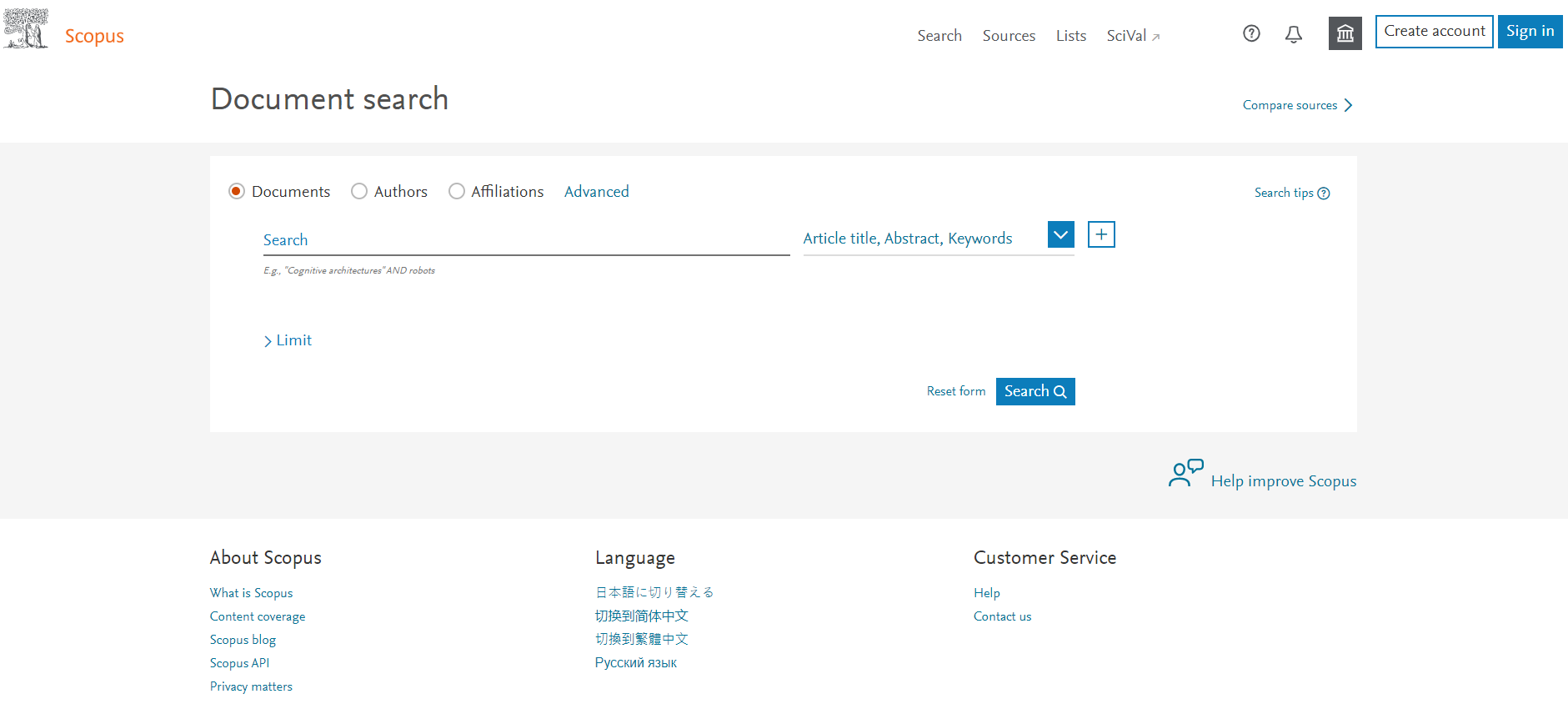
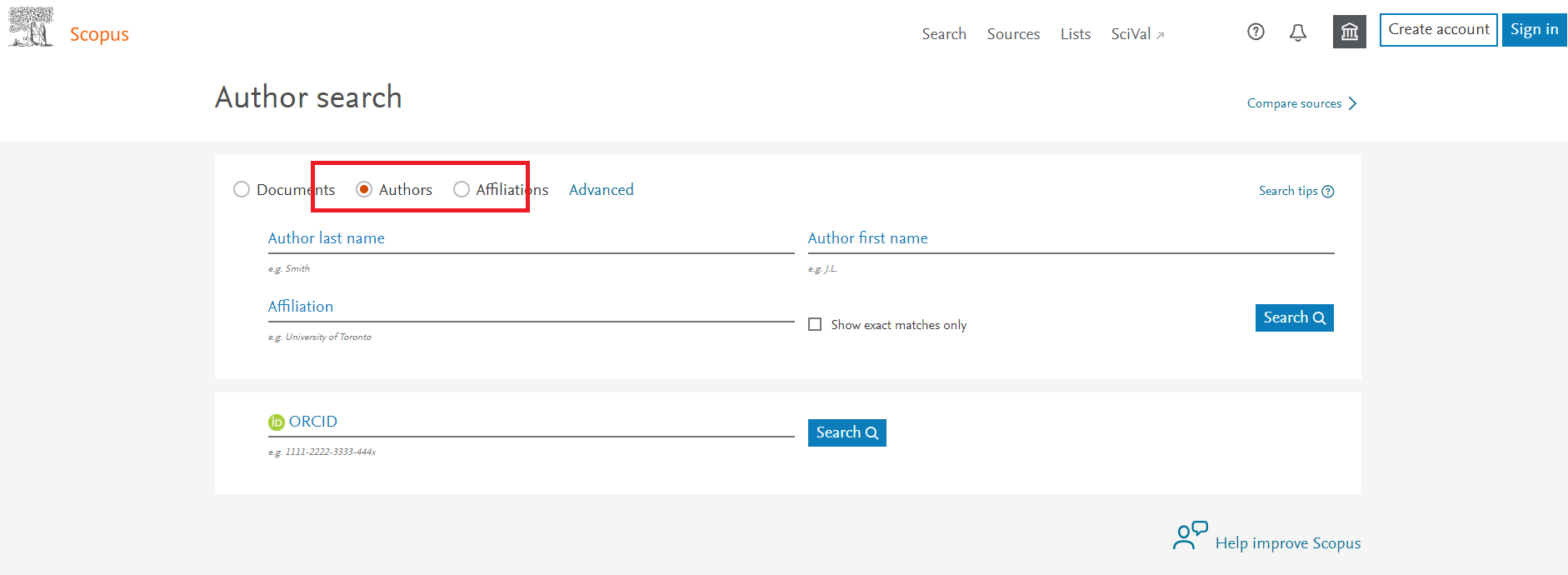
Go to Scopus, and click on the Author search tab on the Scopus homepage.
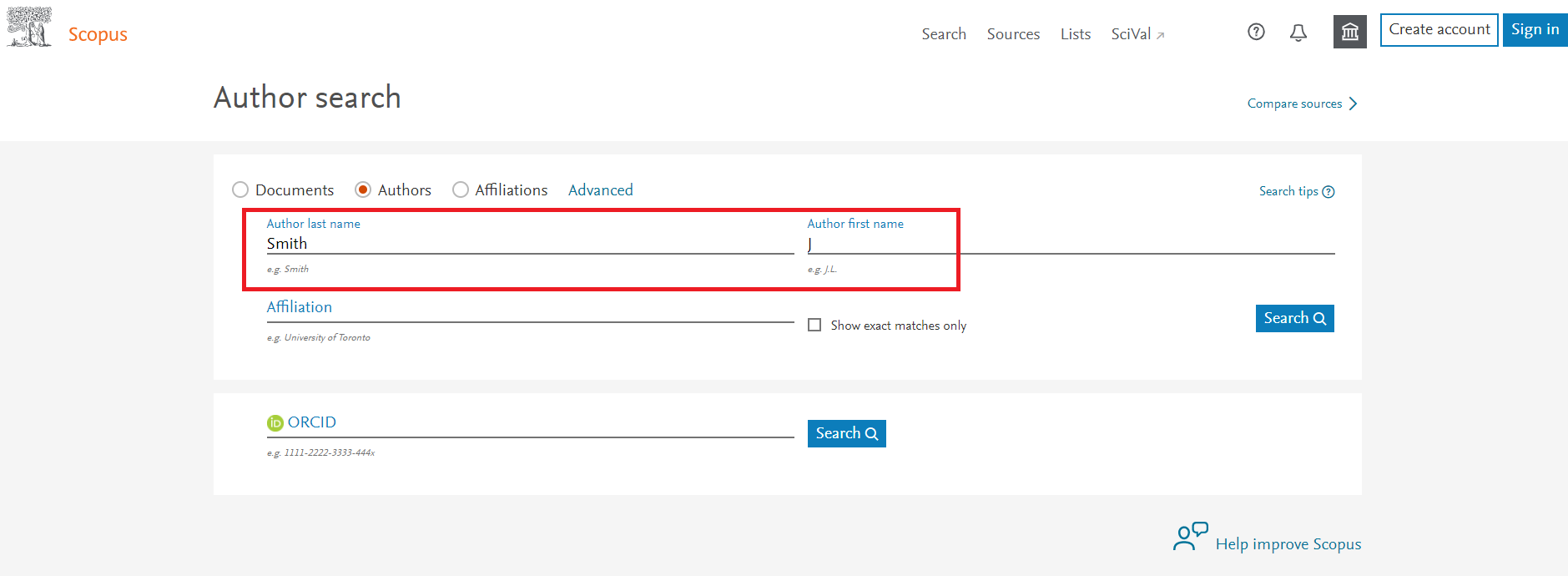
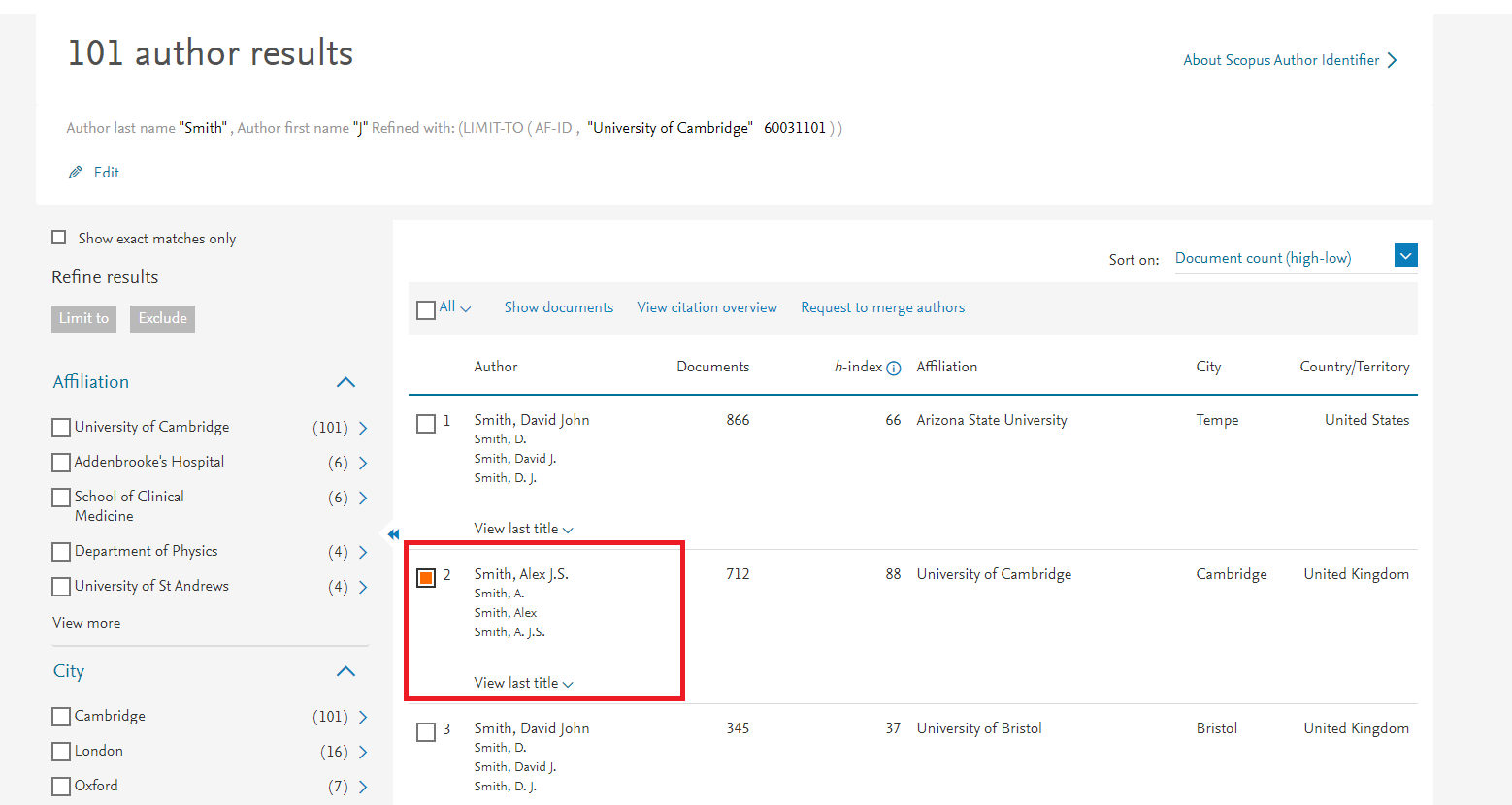
Enter the author's last name and initials or first name into the appropriate search boxes, click “Search”.
For example:

  • Author last name: Smith
  • Author first name: J

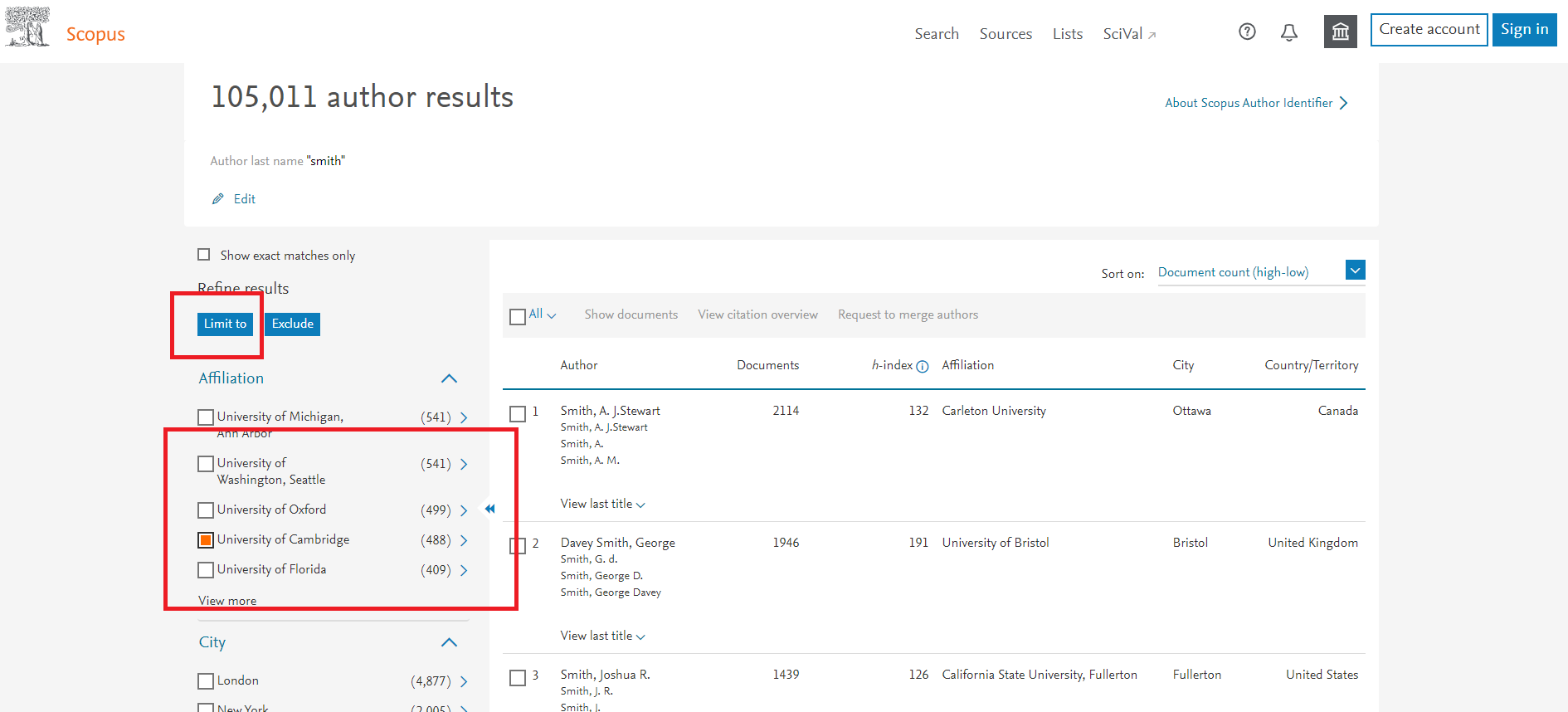
Scopus will display a list of authors that meet your search criteria. Limit by "Affiliation" if necessary.
For example:

  • Limited to "University of Cambridge"

On the author results page, click on the name of the author whose details you would like to view.
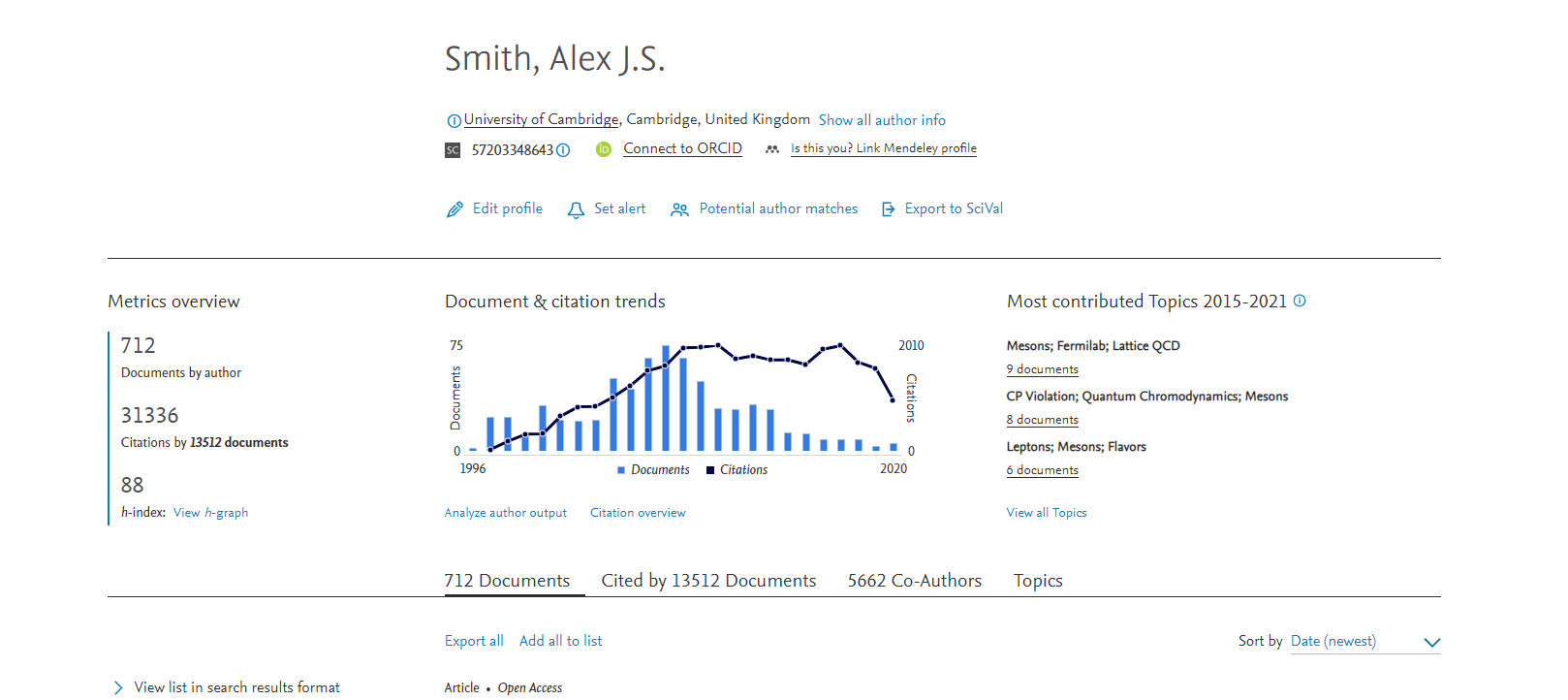
The Author details page displays:

  • Affiliation
  • Number of documents published (that are indexed in Scopus)
  • Total citations
  • h-Index
  • Author's Scopus ID

Author could view the citation report of his publications by clicking “Citation overview".
You need an Elsevier account to edit your profile. If you do not have one, you may create an account following this guide.

Log in to Scopus and find your profile. Click Edit profile.

  1. Select your preferred name and affiliation from the drop-down list.
    💡You need to have Lingnan-affiliated articles indexed on Scopus to be able to see Lingnan University from the list.
  2. Click open the lists of research outputs to add and remove items.
⭐ 
Always remember to “Review changes” before submitting requests. You should get an email notification afterwards. It takes time to process the requests. You will get another email once it is done.
For the most updated guidelines on author profile editing, you may refer to this Scopus guide.

Sometimes, you may have multiple author profiles. This is because Scopus builds profiles automatically, and may create duplicate profiles for individuals with name variations or those who have worked in various organisations. By merging profiles to group all your publications together, you can retrieve more accurate citation counts and metrics.


Sign in and conduct an author search.

Select your profiles and click “Request to merge authors”. You will then be directed to your merged profile. Read the previous guide to see how to edit your profile.

ORCID is an author profile platform. It creates a unique identifier for each researcher to map research outputs with profiles accurately. By connecting your Scopus profile to ORCID, you can make your publications more discoverable.

Please refer to our LibGuide for more details about ORCID.


Find your profile, and click . Sign in to ORCID and authorise access.

Follow the prompted steps to select profile and profile name, review publications and profile, then send your Scopus ID and Scopus publication list to ORCID.

Your ORCID ID should show up on your Scopus profile. The same goes for your Scopus ID on your ORCID profile.


If you want to stay up-to-date about Scopus author profile management, check out these two official guides: